Sunday, May 18, 2014

Godzilla

Title: Godzilla
Director: Gareth Edwards
Written by: Max Borenstein
Starring: Aaron Taylor-Johnson, Ken Watanabe, Elizabeth Olsen, Juliet Binoche, Sally Hawkins, David Strathairn, Bryan Cranston

While walking out of the theater after watching the credits roll for the most recent installment of Godzilla, this one helmed by up-and-coming British director Gareth Edwards, I overheard a young man remark "it almost makes me forget about the 1998 Godzilla." If this is the sentiment expressed by the majority of moviegoers this summer season, then mission accomplished for Edwards and company, who several years ago set to wipe out from the collective unconscious the memory of Roland Emmerich's overblown and intellectually bankrupt 1998 blockbuster. What Edwards and screenwriter Max Borenstein have managed to do is make the anti-Emmerich Godzilla, a thoughtful, slow-moving blockbuster in which humans and monsters have equal billing. In some ways, this newest imagining of Godzilla goes a little too far in that direction. It suffers, at times, from self-seriousness. But overall, the movie is a successful reboot. The cast, anchored by Aaron Taylor-Johnson (Kick-Ass) and Bryan Cranston (Breaking Bad), lends credibility to the picture; Edwards and cinematographer Seamus McGarvey punctuate the movie with some amazing visual moments; and the monster itself is that rare creation in a world of overwrought digital effects -- one that manages to impress.

Godzilla begins with a pre-title sequence set in 1954, after which it jumps forward in time to 1999, where scientists are called to the Phillipines to investigate puzzling fossils and radiation signatures. From there it moves northeast to Japan, where the movie introduces Joe Brody (Cranston), his wife Sandra (Binoche), and their young son. The majority of the movie takes place fifteen years later, in 2014, where the events of 1954 and 1999 culminate in a major crisis for humankind.

Speaking of humans: for a long time they are the only focus of attention in Godzilla. As in Spielberg's masterwork Jaws, Gareth Edwards wisely chooses to keep his monsters under wraps and shrouded in secret so their arrival on screen is that much more impactful. The "King of the Monsters," after all, should make a kingly entrance. So it's up to people to keep the production moving forward. And while the writing is not quite worthy of a Pinter play or Shakespeare sonnet, and the drama is not quite as powerful as it should be, it still manages to set a solid foundation so that when the the forces of nature descend on human civilization, the audience appreciates the emotional baggage of the movie's protagonists and understands the science behind its monsters.

Emotionally and intellectually, Godzilla hits all the right notes. But visually, it rises into the stratosphere. The earlier comparison to Spielberg was no accident. In Godzilla, Edwards and McGarvey seem to be channeling the legendary director with their aesthetically arresting use of light, shadow, and, especially, mirrors. The visual highlight of the movie, however, is entirely original: a high-altitude low-opening (HALO) jump at dusk, framed against a stormy sky, lit by crimson-red flares.

Walking out of the theater on a sunny Saturday afternoon, I, too, had almost forgotten about the 1998 Godzilla. Whereas Emmerich's movie was boastful of its special effects and meager in its characters and science, Edwards Godzilla is rich in text and subtext, and uses digital effects to texture a vivid visual landscape of monsters, heroes, and nuclear weapons. It's the Godzilla movie we deserve.


Saturday, May 17, 2014

Top 10 Most Disappointing Games of the Seventh Generation

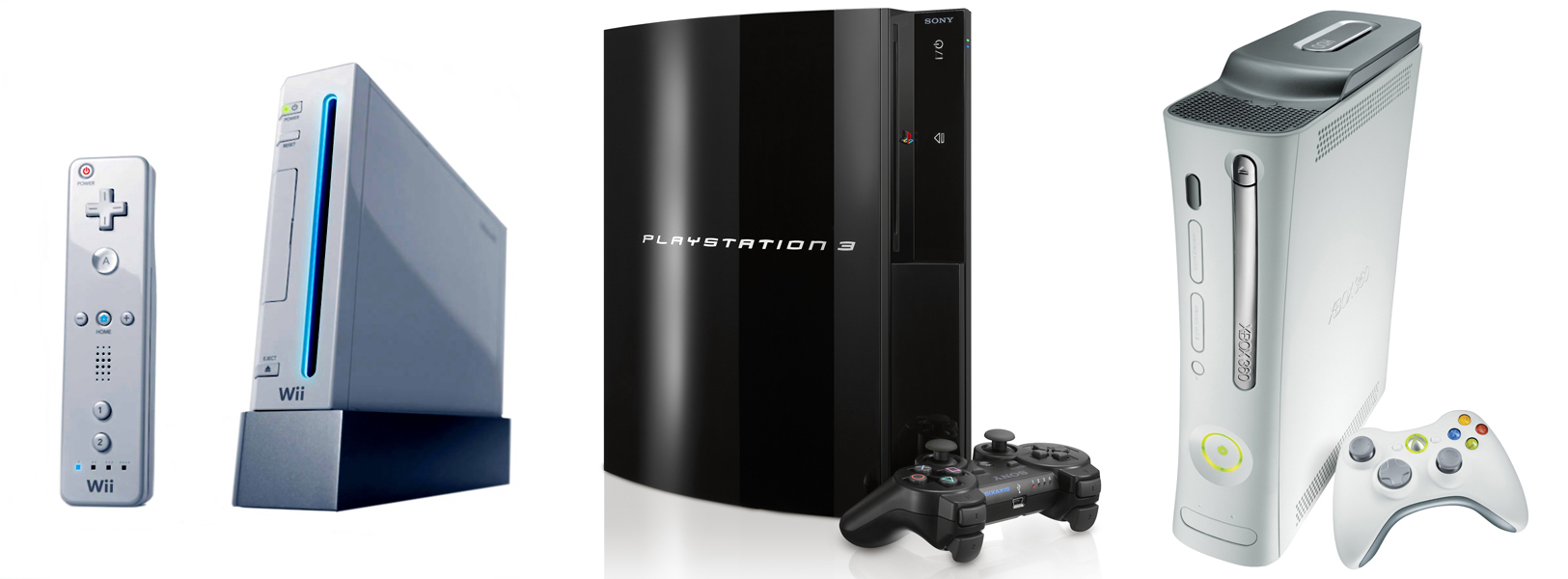
With the Xbox One and PS4 launching last winter, the eighth generation of video games officially began in full. So it seems like now is as good as time as any to look back on the seventh generation and take stock. For me, the seventh gen was a mixed bag. There were many great games and great experiences, in no small part due to fierce competition among Sony, Nintendo, and Microsoft. But there were also bad business practices and many -- too many -- unfinished, buggy, and otherwise incomplete games released. All too often, consumers were treated as Beta testers for products soon to be patched, updated, or made whole with overpriced downloadable content. Equally frustrating were a handful of high-profile, hyped-up games that failed to deliver, either technically, mechanically, or both. Ten such games are listed below. These titles, although very different in terms of scale, scope, genre, and pedigree, all share one thing in common: they're among the most disappointing games of the seventh generation.


#10
Too Human


Denis Dyack and his team at Silicon Knights were once a force to be reckoned with. From 1996 to 2004 the studio developed three excellent games: Blood Omen, Eternal Darkness, and a Gamecube port of Metal Gear Solid. The team's follow-up, Too Human, was less impressive. Although the game features an original premise -- the Norse gods as cybernetically-enhanced supermen -- its linear level design and tedious gameplay turned what could have been a bold and original action RPG into just another mediocre game.


 #9
Duke Nukem Forever 


After 15 years in development hell, Duke Nukem Forever finally emerged in 2011. Having changed developers and publishers so many times, and stopping and starting for over a decade, Duke Nukem Forever was, perhaps, destined to fail. Technically and structurally, it represents a major step backward for first-person shooters. The action is flat and joyless; the graphics are muddy and blocky; and the script is humorless and misogynistic. In short, it's a train wreck.


 #8
Conduit 2 


 No one would ever claim the original Conduit as a world-beater. It stands today as an unspectacular, straight-forward corridor shooter. But whereas the first game was a modest success with good gunplay, an interesting storyline, and excellent voice acting, the sequel is a jumble of undercooked ideas and mechanics with an incoherent storyline and some of the worst writing and voice acting of the past few generations.


#7
Medal of Honor 


The original Medal of Honor was one of the best first-person shooters of the fifth generation. It was atmospheric, it was smart, it was deep and varied, and, most importantly, it was fun to play. The Medal of Honor reboot in 2010 is anything but. It's a shame that Danger Close Games decided to make a Call of Duty knock-off instead of focusing on what made the early MoH games so enjoyable. Almost every idea in Medal of Honor has been borrowed from other series, most notably Battlefield and Call of Duty. It's all been done before, and done better.


 #6
Resident Evil: Operation Raccoon City 


Four-player co-op games are hard to come by. Great four-player co-op games, as evidenced by Operation Raccoon City, are even harder to come by. The game, which serves as a spin-off from the venerable survival-horror series, was best described by Audrey Drake at IGN as "...little more than a poor man's SOCOM, and a destitute man's Resident Evil." Bad shooting and cover mechanics, inconsistent AI, and boring, uninspired level design drag the game down. But it's the half-baked, non-canonical story and forgettable, interchangeable characters that spoil what was, in theory, a really great game.


 #5
Turok 


Turok is a child of the fifth generation of video games, and perhaps that's where it should of stayed. The original trilogy, apart from an average third entry, was excellent; the spin-off Rage Wars was multiplayer mayhem at its finest. Then, in the sixth generation, came the massively disappointing Evolution, and after that, in 2008, a reboot. It's this reboot that's especially discouraging because, like Duke Nukem Forever, it strays far from the series' roots. It's safe, uninspired, and boring, with generic enemies and environments. It's just another below average shooter, a far cry from the challenging, surprising, and atmospheric games that represented the franchise once upon a time.


 #4
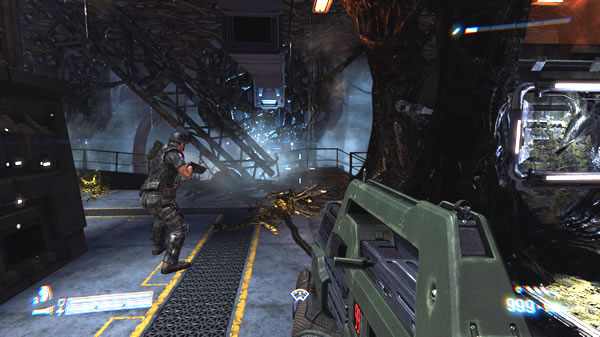
Aliens: Colonial Marines 


If Operation Raccoon City wasn't proof enough that four-player co-op games are capable of massive disappointment, look no further than Colonial Marines, another game with a good concept and rich mythology that suffers from technical, mechanical, and presentation problems. The single-player mode is dated, visually and mechanically; the story is more fan-fiction that anything; and the bugs and glitches are frequent and hilariously bad. Multiplayer options are surprisingly enjoyable, but they're not enough to save the overall package.


 #3
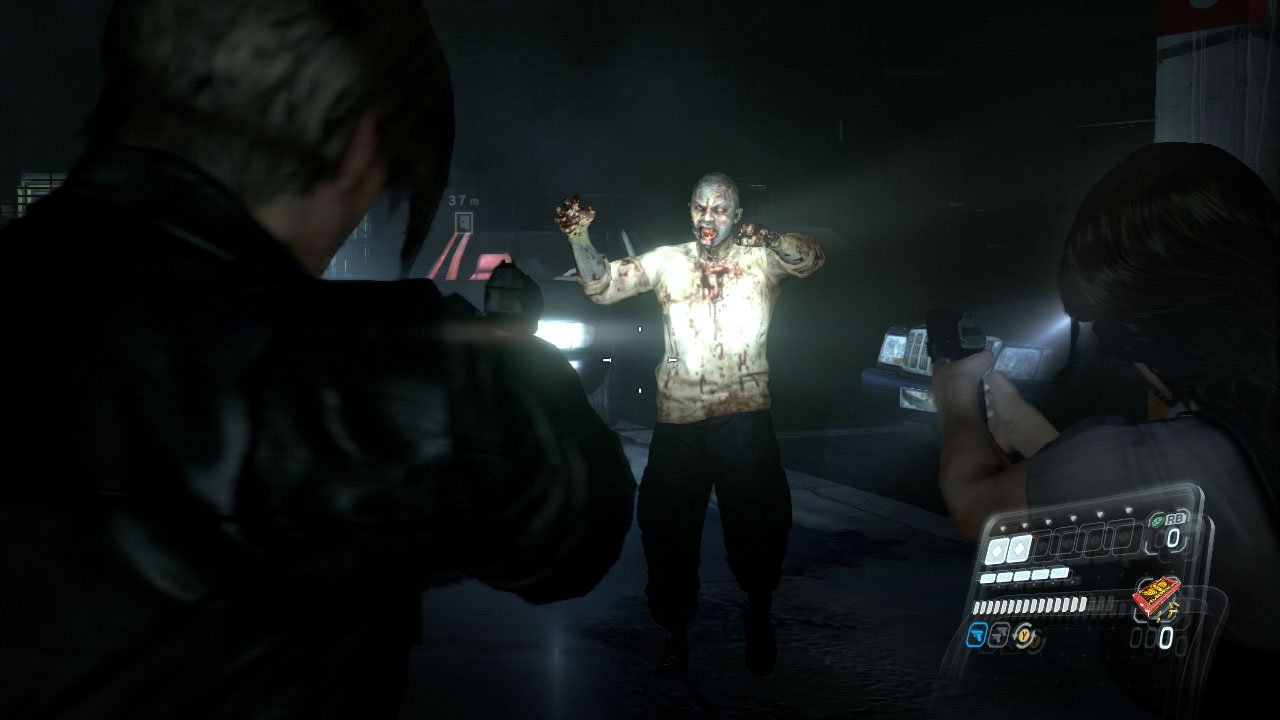
Resident Evil 6 


Many fans of the early Resident Evil games express disdain for Resident Evil 5 because the game is far more action-oriented than its predecessors, but at least it plays well. Resident Evil 6, conversely, plays like a wet dish towel. Featuring three campaigns, each of which follows a famous (or infamous) Resident Evil personality, RE6 is a long, substantial game. But it's also a frustrating and sometimes hollow game, one so packed with interactive cut-scenes and quick-time events that it feels, at times, like a game on auto-pilot. Capcom clearly invested more time and resources in presentation than in gameplay, and it shows.


 #2
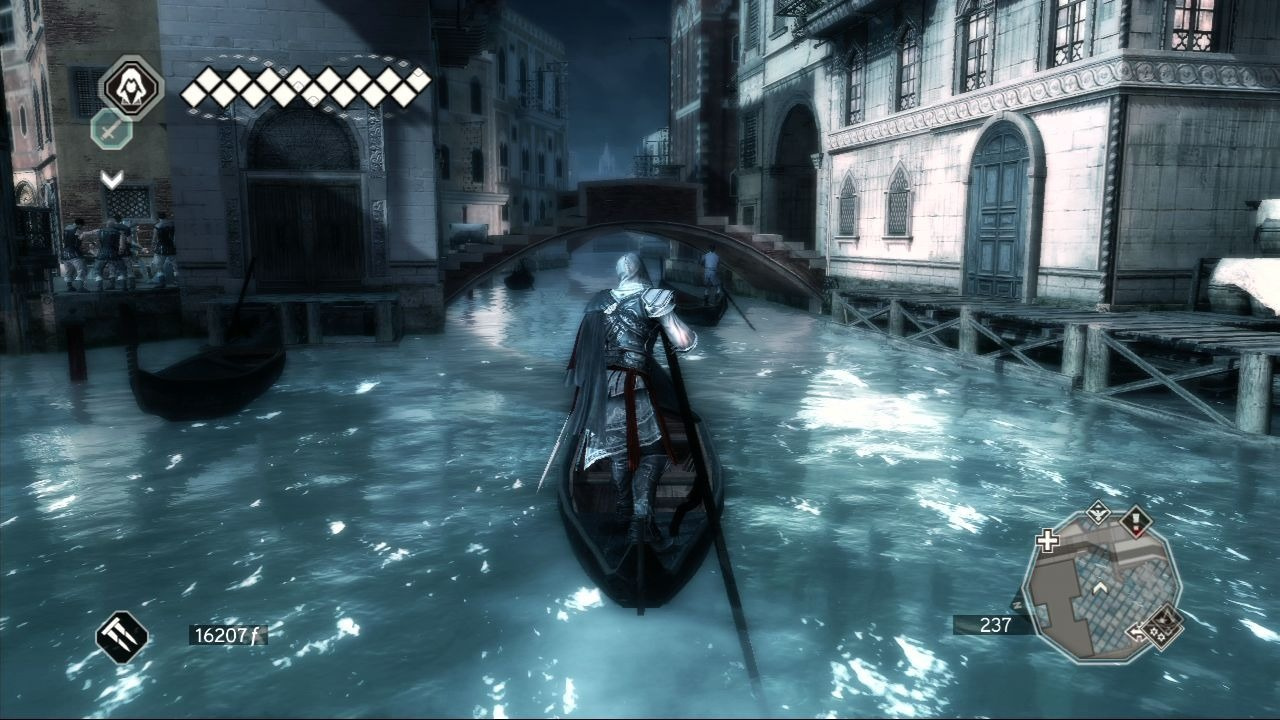
Assassin's Creed II 


The first Assassin's Creed was criticized for being repetitive and plodding, so Ubisoft attempted to fix these issues in the sequel by adding a larger, more open world with lots to do and see. While the world is undoubtedly bigger, the content inside is spread so thinly that much of the game is spent wandering from point A to point B, using Ubisoft's patented one-button-does-everything scheme. What's worse is that the content, once promised by the developers to be interesting side-missions and quests that added texture to the main campaign, somehow devolved into fetch quests and rooftop races.


#1
Killzone 2 


How Killzone 2 earned a "most improved sequel" award is a complete mystery. It represents a significant step backward from the first game, which, incidentally, is one of the most underrated games of all time. Where Killzone was intelligent, thoughtful, and replete with interesting mechanics and scenarios, Killzone 2 is a dumb mess. The characters are poorly-written and unlikable, the story is contrived, and the gameplay is uninspired and generic. Killzone brings nothing to the table other than pretty graphics.

Sunday, March 30, 2014

Top 10 Video Game Songs

There are many things that define a great game: attractive presentation; competent graphics, physics, and sound design; intuitive controls; and, above all else, mechanically-sound gameplay. But there's also something else, something that doesn't necessarily define how a game plays, but very much defines how a games feels, and how we remember it. That something else is music, and it's an important, if sometimes overlooked, part of the modern video game industry.

Below is a list of what I consider to be the top ten video game songs, sampled from the last thirty years of video games. Some of the songs are bombastic, others soulful and mellow, others subtly sweet. I hope you enjoy them as much as I do, and I hope they bring back some fond memories.

Without further ado, I present the top ten video game songs.


#10
Dr. Wily Stage 1/2 
(Mega Man 2)


Feeling the urge to play air guitar? I don't blame you. Few video game themes are as catchy and invigorating as the music used in both Dr. Wily stages in Mega Man 2. Traditionally, Capcom used separate themes for each Wily encounter, but when you have access to a song this good, why bother?


#9
Romance Theme
(The Legend of Zelda: Skyward Sword)


I know what you're thinking. Where the %*#$ is Gerudo Valley? And where's Dragon Roost Island, you $@*#? As much as I enjoy those songs, I think Romance Theme from Skyward Sword just might be the finest track from the entire Zelda discography, and that's saying a lot. It's a beautiful medley of instruments -- flute, oboe, bassoon -- playing melodies and counter melodies. It's impossible not to smile when you hear it.


#8
The Sun Rises 
(Okami)


A game as beautiful as Okami deserves a beautiful soundtrack. And no song in Okami is quite as beautiful, or as complex, as The Sun Rises. Five instruments -- cello, violin, piano, shamisen, and shakuhachi -- are deployed to great effect in this song, which plays during a climactic boss battle.


#7
Wicked Child 
(Castlevania)


Some series have so many excellent songs that they could fill up a top ten list on their own. Castlevania, which has been delighting video game fans for almost 30 years, is one such series. I was tempted to include songs from Rondo of Blood and Symphony of the Night, but none matched the rhythmic intensity of Wicked Child, which first appeared in Stage 3 of the original Castlevania. Those damn hunchbacks...


#6
Gusty Garden Galaxy 
(Super Mario Galaxy)


Rumor has it that Nintendo Gamer editor Matthew Castle loves Gusty Garden Galaxy so much that he played it on a loop while he wrote his Super Mario Galaxy review. Can't say that I blame him. Super Mario Galaxy boasts one of the finest orchestral soundtracks in any video game, ever, and Gusty Garden is probably its best track.


#5
Fear Factory 
(Donkey Kong Country)


There are only so many musical geniuses in the video game industry: Koji Kondo, Nobuo Uematsu, and, yes, David Wise. His work in the Donkey Kong Country trilogy is especially good. The standout track in the premiere game is Fear Factory, a masterpiece of industrial, ambient sound.


#4
Big Blue 
(F-Zero)


The original F-Zero features several bold, original songs, including fan favorite Mute City, but to me Big Blue will always come out on top. Flashy, frenetic, almost hyperactive, it represents the breakneck speed of the game perfectly.


#3
Terra's Theme 
(Final Fantasy VI)


Like Castlevania, Final Fantasy could dominate this list single-handedly. It's a series well known for its rich, diverse, and imaginative songs, including this gem from Final Fantasy VI. Terra's Theme is the most ubiquitous song in Final Fantasy VI, as it plays in the background on the world map. Smooth, steady, at times vaguely militaristic, it's probably the greatest overworld theme ever written.


#2
Halo Theme 
(Halo: Combat Evolved)


What do Mr. Clean, Flintstones Vitamins, and Halo have in common? The same musical mastermind, Martin O'Donnell, wrote the themes to all three. And while his TV jingles are catchy, it's his bombastic, layered music in the Halo series that truly defines his skill as a composer. His greatest achievement is the main theme from Halo, which is heavy on deep drum beats, fast-paced strings, and, for good measure, a chant. It's the perfect invitation to the thrilling, alien, and mystical world of Halo.


#1
Stickerbush Symphony 
(Donkey Kong Country 2)


Here it is, David Wise's magnum opus. Filled with the jazzy, ambient music that defined his work in the Donkey Kong Country trilogy, Stickerbush Symphony is a true work of art. It's soulful, earthy, and, in rare moments, even plaintive. It's a testament to Wise's skill in creating not only music, but sound as well. 

Tuesday, March 11, 2014

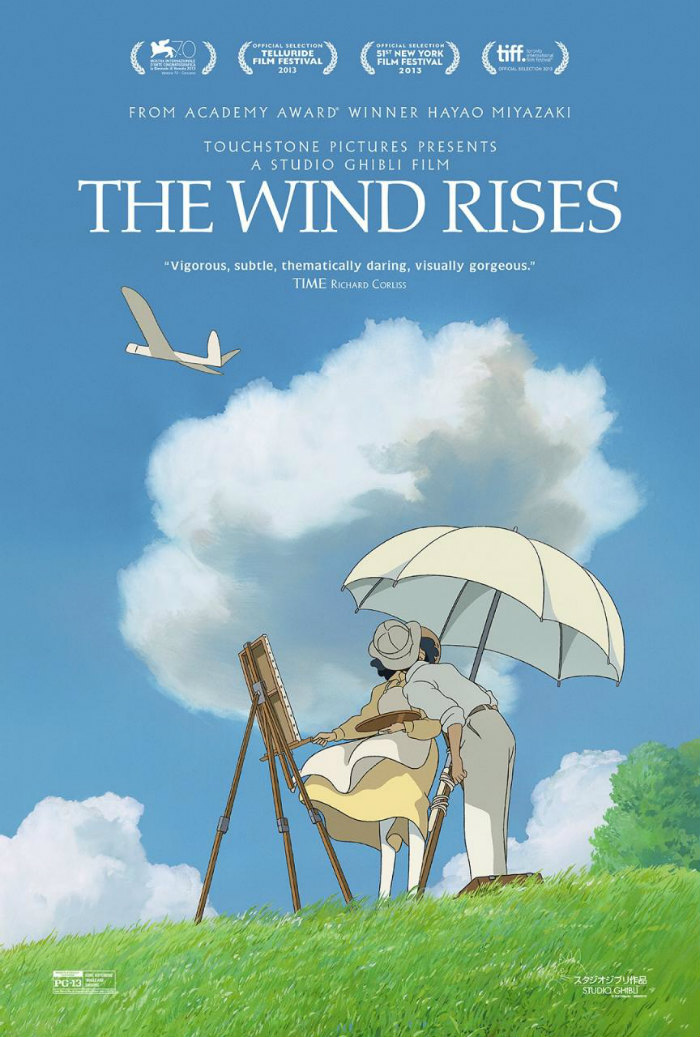
The Wind Rises

Title: The Wind Rises
Director: Hayao Miyazaki
Written by: Hayao Miyazaki
Starring: Joseph Gordon-Levitt, Emily Blunt, John Krasinski, Martin Short, Werner Herzog

In one of the many dream sequences that populate Hayao Miyazaki’s latest masterpiece, The Wind Rises, Italian aeronautical engineer Caproni says to the movie’s protagonist Jiro, “artists are only creative for ten years.” It’s here, and during other moments, where Miyazaki, who announced his retirement (again) before the premiere of the movie, seems to be channeling his own creative career. Anyone familiar with Miayazaki’s resume knows that the ten-year rule hardly applies to him; for over thirty years, he’s been making some of the world’s most beautiful, expressive, emotionally powerful animated feature films, many of them masterworks. Yet The Wind Rises looks to be the last, at least according to Miyazaki, who hopes to pass along his work to a younger generation of animators. Miyazaki has entered retirement before – at one point he claimed Princess Mononoke (1999) would be his final film – yet there seems to be a sense of finality to his most recent announcement. Thus, the watching of The Wind Rises is a bittersweet affair, bitter because it may be his last, sweet because it stands as one of the finest, most elevated movies of his long, brilliant career.

The Wind Rises is a fictionalized account of aeronautic engineer Jiro Horikoshi, who famously designed the Zero fighter, used by the Japanese navy during World War II. Although the movie faithfully recreates Jiro’s professional career, it invents his private life. As a result, The Wind Rises is part biopic, part historical fiction.

Fans comfortable with Miyazaki’s earlier works may be surprised by the contents, artistic and thematic, of The Wind Rises. There is very little of the fantastical that so often accompanies his stories. Only in dream sequences does the movie adopt the surrealistic visuals and other-worldly creations that define Miyazaki’s imaginative landscape; much more often the movie is dominated, atypically, by realism. The Wind Rises, in other words, is more David Lean than Walt Disney. It’s also, by far, his most difficult, abstruse feature. The movie demands some knowledge of world history, and the ability to follow a story that moves, often seamlessly, between reality and fantasy. In this way, The Wind Rises recalls 8 ½, Federico Fellini’s challenging, sometimes impenetrable semi-autobiographical masterpiece.

This uncharacteristic realism and density, however jarring, points to a significant elevation and evolution of Miyazaki’s filmmaking. It may not be his best movie – that honor still goes to Spirited Away – but it’s his most dramatic. In terms of narrative, storytelling, composition, cinematography, and editing, The Wind Rises is Miyazaki’s finest work. It’s also his most transcendent. It breaks down the traditional barriers of animation to produce something amazingly lifelike, not in terms of its aesthetic but in terms of its structure.

If The Wind Rises is indeed Miyazaki’s final film, it’s a worthy swan song for the greatest living animation director. It’s his most complex, elevated, theatrical feature yet.


Thursday, February 13, 2014

Nintendo Direct Today at 5:00pm EST

Nintendo will hold a Nintendo Direct video briefing today that focuses on Wii U and 3DS games coming by the end of spring 2014. The event begins at 2 p.m. PDT/ 5 p.m. EDT and will be streamed through the Nintendo Direct website.

This event marks the first Nintendo Direct of 2014. The most recent Nintendo Direct was held on December 18. It introduced a Zelda spin-off tentatively titled "Hyrule Warriors," and NES Remix, among other games. Some high-profile titles coming to Nintendo platforms this spring include Mario Kart 8, Donkey Kong Country: Tropical Freeze, and Yoshi's New Island.

Wednesday, January 29, 2014

Microsoft Acquires the Rights to Gears of War

Microsoft announced this week that it has acquired the rights to the Gears of War franchise from developer Epic Games. Although the series was mostly synonymous with the Xbox brand during the seventh generation, Microsoft never actually owned the rights. That is, until now.

Microsoft now owns all the the rights to Gears of War, including "all existing and future games, entertainment experiences and merchandise." Moving forward, the series will be developed by Microsoft's Black Tusk Studio. Rod Fergusson, former Director of Production at Epic Games, has joined Black Tusk and will play a "key studio leadership role at Black Tusk on the development of the franchise going forward."

Monday, January 20, 2014

Top 10 Best Games You've Never Played

Everyone knows Super Mario, Grand Theft Auto, and Call of Duty. They're household names, they bring in millions of dollars, they attract legions of fans. But what about the lesser-known titles, the games that are unknown to the general public, in some cases unknown to even diehard video game fans? Many of them are doomed to obscurity despite glowing reviews from critics and grassroots campaigns to raise awareness.

Such are the following ten games. Some are critical darlings, some are cult classics, but all missed the mark in terms of sales. They're great or near-great, but they're also greatly unknown. They're the best games you've never played.


#10
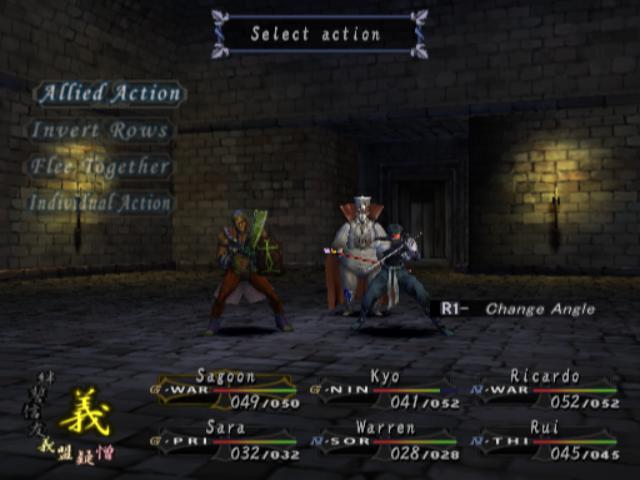
Wizardry: Tale of the Forsaken Land
(PS2/2001)


A spin-off of the Wizardry series, Tale of the Forsaken Land tells the story of a paralyzed city with a forgotten past, and a user-created protagonist who infiltrates a deadly labyrinth nearby to discover the truth. Fans of fast-paced action RPGs might be turned off by its slow, methodical pacing, but the game emerges as one of the best PC-style role-playing games on PS2, really on any console. The class system and "allied actions" allow for a healthy amount of strategy; the game's presentation, in terms of storytelling, music, and especially sound design, is excellent; and the level design is varied and, often, quite challenging.


#9
Folklore
(PS3/2007)


As with many games on this list, Folklore embraces several interesting and different mechanics and ideas that failed to resonate with consumers. Set in a small seaside village in Ireland, the game slowly unravels a mystery that flows across two worlds: the real world and the netherworld, home to creatures and spirits called "folk." Once defeated, these folk can be used by the game's heroes, giving players a huge library of offensive and defensive moves. But this unique and effective battle system is only one part of what makes Folklore so much fun to play. Also important is its rich mythology, its poignant story, rich atmosphere, and spectacular artwork. To this day, Folklore remains one of the prettiest games available on PS3, thanks in large part to the beautiful and enchanting art direction from the artists at Game Republic.


#8
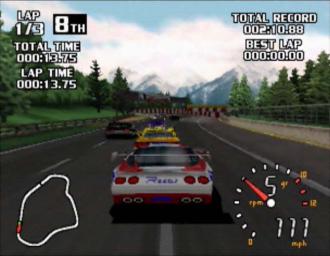
World Driver Championship
(N64/1999)


Arriving on N64 shortly after the release of Gran Turismo on PS1, World Driver Championship suffered from some serious bad timing. With its non-licensed cars, lack of real-time damage, and the lower install base on N64, World Driver Championship didn't stand a chance to match the phenomenon that was Gran Turismo. Nevertheless, WDC is an excellent, addictive racing sim that controls like a dream and looks like a million bucks, thanks to detailed models and advanced lighting and atmospheric effects from the tech wizards at Boss Game Studios. Despite some missing damage models, mentioned above, the physics engine is outstanding, as is the game's artificial intelligence and track design.


#7
Castlevania: Rondo of Blood
(TurboGrafx-16/1993)


The Castlevania series has been a part of the video game industry for decades, during which it has won over a huge group of fans. Yet not every game in the series is well-known or well-played. Such is the case with Rondo of Blood, one of the very best Castlevania games but also one of the most obscure. Launched originally in Japan on TurboGrafx-16 in 1993, Rondo of Blood made its way to North America and Europe fourteen years later as unlockable content in The Dracula X Chronicles on PSP (it arrived on the Wii Virtual Console one year later). Rondo of Blood was one of the last of the "classic" stage-based, linear Castlevania games; its direct sequel, Symphony of the Night, is credited with transforming the series into a platform-adventure much like the Metroid franchise.


#6
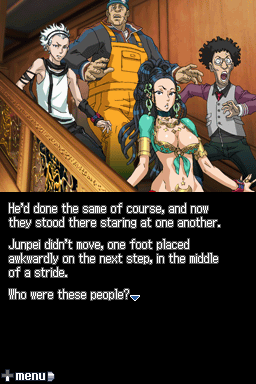
999: Nine Hours, Nine Person, Nine Doors
(DS/2009)


Although it earned a sequel and a significant cult following, 999 has not made much of a splash with the larger gaming public. Part puzzle game, part visual novel, 999 asks its players to solve puzzles and riddles and also to make life or death choices. Featuring several alternate "bad" endings and only one true "good" ending, the game encourages multiple play-throughs. The tedium of replaying each segments and puzzle can be frustrating at times, but the payoff is worth it. 999 boasts perhaps the best, most mind-blowing story of any game ever made.


#5
Astro Boy: Omega Factor
(GBA/2003)


From the action experts at Treasures comes this hidden gem on Game Boy Advance, a frenetic, kinetic beat 'em up starring Astro Boy. Omega Factor isn't especially long, and it suffers from some repetitive levels, but it consistently delivers spectacular action set pieces and engaging fighting mechanics. One element that separates it from other action games is an abundance of NPCs, all drawn from the Astro Boy universe. These characters, once met, provide points to Astro to upgrade his physical performance.  A feast for the eyes and a joy to play, Omega Factor stands as one of the very best licensed video games of all time.


#4
Zack & Wiki: Quest for Barbaros' Treasure
(Wii/2007)


Despite high scores from gaming publications and a campaign from Matt Casamassina at IGN, which encouraged Wii owners to pre-order the game, Zack & Wiki underperformed in sales. A throwback to the point-and-click adventure games that filled the PC landscape in the early 90s, Zack & Wiki uses the Wii remote as a mouse substitute, allowing players to point and "click" their way through several pirate-themed levels, all of which are packed with brain-teasing puzzles. One of the more interesting mechanics in the game allows Zack, a young would-be pirate, to shake his partner Wiki, a golden, floating monkey, to transform enemies into useable items.


#3
Tempest 2000
(Jaguar/1994)


The best, and, some might argue, the only reason to own an Atari Jaguar, Tempest 2000 is a reimagining of the 1981 arcade classic Tempest. Enhanced with smooth graphics and a techno soundtrack, Tempest 2000 boasts three one-player modes: Traditional Tempest, Tempest Plus, and Tempest 2000, which is a complete remake of the original coin-op classic, featuring new enemies, weapon power ups and a brand new jump move. Tempest 2000 also features a terrific two-player mode called Tempest Duel, in which players control ships at either end of a web and try to blast each other to smithereens. Each ship is equipped with a mirror that reflects enemy shots.


#2
Beyond Good & Evil
(PS2, Xbox, GCN/2003)


Tragically ignored by consumers, Beyond Good & Evil was a financial disappointment despite critical acclaim. Set on an alien world, Beyond Good & Evil follows the exploits of an investigative reporter named Jade, who stumbles upon a massive conspiracy. Stealth is an important component of the gameplay in Beyond Good & Evil: while Jade does carry an offensive weapon, she often has to embrace a clandestine approach when faced with overwhelming enemy forces. One of the most engaging and immersive elements in the game is the ability to take photographs with Jade’s camera. The camera can be used to photograph evidence of the conspiracy or simply to snap pictures of the fauna on Hillys.


#1
Psychonauts
(Xbox, PS2, PC/2005)


From the brilliant mind of Tim Schafer comes Psychonauts, one of the most unique and enjoyable platform games of the last 20 years. Infused with the expert storytelling and clever sense of humor that defined Schafer's early career with LucasArts, Psychonauts excels in both presentation and gameplay. The game is funny, it's heartwarming, it's surprising, but most importantly it's technically sound and, mechanically, engaging. Players control Raz, a young boy gifted with psychic abilities who sneaks into a summer camp for other like-minded children. That Psychonauts suffered from poor sales is a crime. It deserves to be mentioned in the same breath as Super Mario Galaxy, Banjo-Kazooie, and Rayman 2.