Thursday, February 13, 2014

Nintendo Direct Today at 5:00pm EST

Nintendo will hold a Nintendo Direct video briefing today that focuses on Wii U and 3DS games coming by the end of spring 2014. The event begins at 2 p.m. PDT/ 5 p.m. EDT and will be streamed through the Nintendo Direct website.

This event marks the first Nintendo Direct of 2014. The most recent Nintendo Direct was held on December 18. It introduced a Zelda spin-off tentatively titled "Hyrule Warriors," and NES Remix, among other games. Some high-profile titles coming to Nintendo platforms this spring include Mario Kart 8, Donkey Kong Country: Tropical Freeze, and Yoshi's New Island.

Wednesday, January 29, 2014

Microsoft Acquires the Rights to Gears of War

Microsoft announced this week that it has acquired the rights to the Gears of War franchise from developer Epic Games. Although the series was mostly synonymous with the Xbox brand during the seventh generation, Microsoft never actually owned the rights. That is, until now.

Microsoft now owns all the the rights to Gears of War, including "all existing and future games, entertainment experiences and merchandise." Moving forward, the series will be developed by Microsoft's Black Tusk Studio. Rod Fergusson, former Director of Production at Epic Games, has joined Black Tusk and will play a "key studio leadership role at Black Tusk on the development of the franchise going forward."

Monday, January 20, 2014

Top 10 Best Games You've Never Played

Everyone knows Super Mario, Grand Theft Auto, and Call of Duty. They're household names, they bring in millions of dollars, they attract legions of fans. But what about the lesser-known titles, the games that are unknown to the general public, in some cases unknown to even diehard video game fans? Many of them are doomed to obscurity despite glowing reviews from critics and grassroots campaigns to raise awareness.

Such are the following ten games. Some are critical darlings, some are cult classics, but all missed the mark in terms of sales. They're great or near-great, but they're also greatly unknown. They're the best games you've never played.


#10
Wizardry: Tale of the Forsaken Land
(PS2/2001)


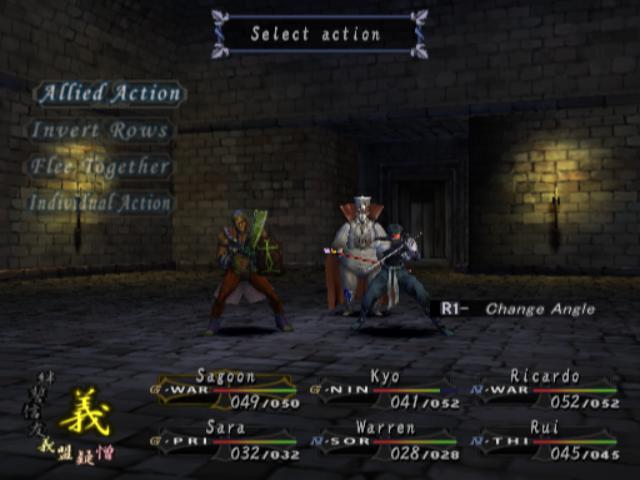
A spin-off of the Wizardry series, Tale of the Forsaken Land tells the story of a paralyzed city with a forgotten past, and a user-created protagonist who infiltrates a deadly labyrinth nearby to discover the truth. Fans of fast-paced action RPGs might be turned off by its slow, methodical pacing, but the game emerges as one of the best PC-style role-playing games on PS2, really on any console. The class system and "allied actions" allow for a healthy amount of strategy; the game's presentation, in terms of storytelling, music, and especially sound design, is excellent; and the level design is varied and, often, quite challenging.


#9
Folklore
(PS3/2007)


As with many games on this list, Folklore embraces several interesting and different mechanics and ideas that failed to resonate with consumers. Set in a small seaside village in Ireland, the game slowly unravels a mystery that flows across two worlds: the real world and the netherworld, home to creatures and spirits called "folk." Once defeated, these folk can be used by the game's heroes, giving players a huge library of offensive and defensive moves. But this unique and effective battle system is only one part of what makes Folklore so much fun to play. Also important is its rich mythology, its poignant story, rich atmosphere, and spectacular artwork. To this day, Folklore remains one of the prettiest games available on PS3, thanks in large part to the beautiful and enchanting art direction from the artists at Game Republic.


#8
World Driver Championship
(N64/1999)


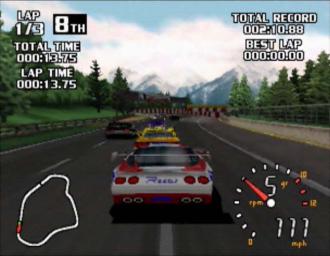
Arriving on N64 shortly after the release of Gran Turismo on PS1, World Driver Championship suffered from some serious bad timing. With its non-licensed cars, lack of real-time damage, and the lower install base on N64, World Driver Championship didn't stand a chance to match the phenomenon that was Gran Turismo. Nevertheless, WDC is an excellent, addictive racing sim that controls like a dream and looks like a million bucks, thanks to detailed models and advanced lighting and atmospheric effects from the tech wizards at Boss Game Studios. Despite some missing damage models, mentioned above, the physics engine is outstanding, as is the game's artificial intelligence and track design.


#7
Castlevania: Rondo of Blood
(TurboGrafx-16/1993)


The Castlevania series has been a part of the video game industry for decades, during which it has won over a huge group of fans. Yet not every game in the series is well-known or well-played. Such is the case with Rondo of Blood, one of the very best Castlevania games but also one of the most obscure. Launched originally in Japan on TurboGrafx-16 in 1993, Rondo of Blood made its way to North America and Europe fourteen years later as unlockable content in The Dracula X Chronicles on PSP (it arrived on the Wii Virtual Console one year later). Rondo of Blood was one of the last of the "classic" stage-based, linear Castlevania games; its direct sequel, Symphony of the Night, is credited with transforming the series into a platform-adventure much like the Metroid franchise.


#6
999: Nine Hours, Nine Person, Nine Doors
(DS/2009)


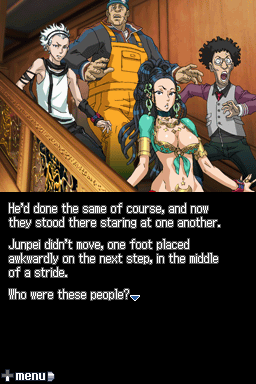
Although it earned a sequel and a significant cult following, 999 has not made much of a splash with the larger gaming public. Part puzzle game, part visual novel, 999 asks its players to solve puzzles and riddles and also to make life or death choices. Featuring several alternate "bad" endings and only one true "good" ending, the game encourages multiple play-throughs. The tedium of replaying each segments and puzzle can be frustrating at times, but the payoff is worth it. 999 boasts perhaps the best, most mind-blowing story of any game ever made.


#5
Astro Boy: Omega Factor
(GBA/2003)


From the action experts at Treasures comes this hidden gem on Game Boy Advance, a frenetic, kinetic beat 'em up starring Astro Boy. Omega Factor isn't especially long, and it suffers from some repetitive levels, but it consistently delivers spectacular action set pieces and engaging fighting mechanics. One element that separates it from other action games is an abundance of NPCs, all drawn from the Astro Boy universe. These characters, once met, provide points to Astro to upgrade his physical performance.  A feast for the eyes and a joy to play, Omega Factor stands as one of the very best licensed video games of all time.


#4
Zack & Wiki: Quest for Barbaros' Treasure
(Wii/2007)


Despite high scores from gaming publications and a campaign from Matt Casamassina at IGN, which encouraged Wii owners to pre-order the game, Zack & Wiki underperformed in sales. A throwback to the point-and-click adventure games that filled the PC landscape in the early 90s, Zack & Wiki uses the Wii remote as a mouse substitute, allowing players to point and "click" their way through several pirate-themed levels, all of which are packed with brain-teasing puzzles. One of the more interesting mechanics in the game allows Zack, a young would-be pirate, to shake his partner Wiki, a golden, floating monkey, to transform enemies into useable items.


#3
Tempest 2000
(Jaguar/1994)


The best, and, some might argue, the only reason to own an Atari Jaguar, Tempest 2000 is a reimagining of the 1981 arcade classic Tempest. Enhanced with smooth graphics and a techno soundtrack, Tempest 2000 boasts three one-player modes: Traditional Tempest, Tempest Plus, and Tempest 2000, which is a complete remake of the original coin-op classic, featuring new enemies, weapon power ups and a brand new jump move. Tempest 2000 also features a terrific two-player mode called Tempest Duel, in which players control ships at either end of a web and try to blast each other to smithereens. Each ship is equipped with a mirror that reflects enemy shots.


#2
Beyond Good & Evil
(PS2, Xbox, GCN/2003)


Tragically ignored by consumers, Beyond Good & Evil was a financial disappointment despite critical acclaim. Set on an alien world, Beyond Good & Evil follows the exploits of an investigative reporter named Jade, who stumbles upon a massive conspiracy. Stealth is an important component of the gameplay in Beyond Good & Evil: while Jade does carry an offensive weapon, she often has to embrace a clandestine approach when faced with overwhelming enemy forces. One of the most engaging and immersive elements in the game is the ability to take photographs with Jade’s camera. The camera can be used to photograph evidence of the conspiracy or simply to snap pictures of the fauna on Hillys.


#1
Psychonauts
(Xbox, PS2, PC/2005)


From the brilliant mind of Tim Schafer comes Psychonauts, one of the most unique and enjoyable platform games of the last 20 years. Infused with the expert storytelling and clever sense of humor that defined Schafer's early career with LucasArts, Psychonauts excels in both presentation and gameplay. The game is funny, it's heartwarming, it's surprising, but most importantly it's technically sound and, mechanically, engaging. Players control Raz, a young boy gifted with psychic abilities who sneaks into a summer camp for other like-minded children. That Psychonauts suffered from poor sales is a crime. It deserves to be mentioned in the same breath as Super Mario Galaxy, Banjo-Kazooie, and Rayman 2.

Friday, December 20, 2013

The Hobbit: The Desolation of Smaug

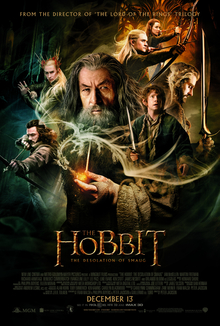
Title: The Hobbit: The Desolation of Smaug
Director: Peter Jackson
Written by: Peter Jackson, Fran Walsh, Philippa Boyens, Guillermo del Toro
Starring: Ian McKellen, Martin Freeman, Richard Armitage, Evangeline Lilly, Benedict Cumberbatch, Luke Evans

What a difference a year makes. Twelve months ago Peter Jackson released The Hobbit: An Unexpected Journey, the first part of a trilogy meant to tell the modest tale of J.R.R. Tolkien's homebody-cum-burglar, to less than stellar reviews. Critics (rightfully) skewered Jackson for the movie's long running time, its over-reliance on digital effects, and its inclusion of superfluous characters and events. Now, a year later, Jackson unveils the inevitable sequel, The Desolation of Smaug, a movie that shares all of the issues that haunted the first Hobbit production yet manages to be surprisingly good. The movie is long, only eight minutes shorter than its predecessor, yet it leaves one wanting more, whereas An Unexpected Journey couldn't end soon enough. The movie is packed, bloated even, with expensive digital effects, yet they are used more wisely on several thrilling set-pieces and to bring the true star of the movie, Smaug, to life. The movie introduces several new characters and storylines absent from Tolkien's original book, yet these characters, especially newcomer Tauriel (Evangeline Lilly), and storylines serve to bind the story together and tie it to Jackson's larger mythology. In short, everything that went wrong in An Unexpected Journey goes right in The Desolation of Smaug.

After a brief flashback, which sets the stage and tone for the 160 minutes to follow, The Desolation of Smaug picks up where the previous movie ended. The reluctant burglar Bilbo Baggins, a company of dwarves, and one sagely wizard flee from pursuing orcs on a quest to reclaim the dwarves' homeland, a mountain kingdom far to the east. The movie gets off to a somewhat slow and shaky start, but by the time the party reaches the poisoned forest Mirkwood, things become more interesting, more lively, and more evenly paced.

In Mirkwood the movie gains momentum, a sense of purpose, and a conscience, the latter thanks to Tauriel, a wood elf who sympathizes with the dwarves and is able to look beyond the borders of the woodland realm to see darkness creeping over the lands of Middle Earth. Both Tauriel and her companion Legolas (Orlando Bloom), one of the stars of the Lord of the Rings trilogy, do not belong in The Hobbit as written by Tolkien, but they belong here in Peter Jackson's version of the story. Bloom's reprisal as Legolas could be easily dismissed as cynical stunt casting, but his character plays an important part in the narrative. He represents the isolationism and xenophobia of the wood elves contrasted against Tauriel's growing sense of duty. The success of this elven twosome, neither of whom are important (or even present) in the original book, is representative of the entire movie, which diverges smartly and successfully from the source material. Where An Unexpected Journey demonstrated a rigid, unimaginative loyalty to Tolkien's words, The Desolation of Smaug wisely forges its own path, discarding and reinventing characters and events to create a more fluid, coherent, and watchable story.

In addition to better storytelling, The Desolation of Smaug features much-improved action set-pieces, including a scary and shocking encounter with giant spiders in Mirkwood forest and a waterlogged barrel-bound escape sequence as fun, creative, and spectacular as anything in The Lord of the Rings movies.

However, nothing in the movie is quite as spectacular as its eponymous villain, Smaug. The digital effects magicians at Weta Digital have created in Smaug perhaps the finest movie dragon of all time, a towering inferno of razor-sharp claws and scaly armor. Voiced in Benedict Cumberbatch's deep baritone, Smaug emerges as a conceited, greedy, intelligent, deeply paranoid character. His one-on-one psychological showdown with Bilbo is perhaps the highlight of the movie, just as Bilbo's riddle contest with Gollum was the highlight of An Unexpected Journey.

The success of The Desolation of Smaug goes a long way toward submerging the memory of the failed first chapter of the trilogy and raises new hopes for the third and final installment. Jackson and company seem to have finally recaptured some of the humor, majesty, and creative energy that defined his Lord of the Rings trilogy. Hopefully this latest trilogy will end on a similarly high note.

Saturday, November 30, 2013

Plants vs. Zombies

Game: Plants vs. Zombies
System: Vita (also PC, Mac, Xbox 360, PS3, DS)
Genre: Tower defense
Developer: PopCap Games
Release date: February 22, 2012


Pros: Great sense of humor, appropriate difficulty curve, good variety
Cons: Game can sometimes "play itself," repetitive at times


Plants vs. Zombies has been around since 2009, but it wasn't ported to Vita until 2012. And while it might not be different enough on Vita to warrant a purchase for current owners, those who have never played the game might want to invest in the portable version on Vita. It doesn't have some of the exclusive content featured on Xbox Live and Playstation Network, but the touchscreen controls and "Zombatar" make it an attractive proposition. No matter which version you get, however, you're guaranteed to have a great time.

Plants vs. Zombies is a tower defense game, meaning that the gameplay revolves around setting up defensive installments to halt waves of enemy forces. Sounds serious and complicated, right? Not with this game. PopCap created in Plants vs. Zombies a consumer-friendly product that looks, feels, and plays smoothly and intuitively. The art direction, with bouncy plants and absent-minded zombies, is playful and fun, and the gradual and forgiving difficulty curve makes the title accessible for players of all ages.

Players select and place each plant with touchscreen controls.

The goal of each level in Plants vs. Zombies is to grow and distribute plants to fend off a zombie invasion of the player's house. Sunshine serves as the energy source to grow plants, which range from peashooters and sunflowers, the latter of which generates additional sun energy, to explosive cherry bombs and some fungi that only appear at night. It's up to each player to determine where and when to place each plant so that the zombie horde is kept away from the brains (and the people attached to them) inside the house.

It's difficult to find fault with a smart, funny, great-looking title like Plants vs. Zombies. The only issues that arise during the game are some levels and missions that feel repetitive and the fact that once a strategy has been conceived and set in motion, the game sometimes goes into an autopilot of sorts. But, apart from those minor issues, the game is solid as a rock, or wall-nut (pictured below guarding the plants). When the main story mode is over, players can experiment with a host of mini-games and challenges, grow plants in a greenhouse, and create custom zombie creations in the "Zombatar" area.

Some plants only appear at nighttime.

Plants vs. Zombies isn't a great game, but it's a solidly-built title with an engaging sense of humor, some excellent art direction (which shines on the Vita's OLED screen), and a long list of challenging and rewarding levels, both in adventure mode and in the mini-game menu. Video game fans of different ages and skill levels should enjoy it, at home or on the go.

Saturday, November 23, 2013

Xbox One Arrives in Stores

The Xbox One launch event in London
The Xbox One, Microsoft's newest entry in the video game market, launched yesterday.

Xbox One retails for $499, one hundred dollars more than the PS4, which launched last week, and $200 more than Wii U, Nintendo's eighth generation home console. In its pitch to consumers, Microsoft has emphasized the non-gaming applications of Xbox One -- improved Kinect motion-tracking, integration with cable providers and fantasy football, and Skype functionality, to name a few -- to justify the increased price point. The centerpiece of the Xbox One system is an integrated and upgraded version of Kinect, Microsoft's motion-tracking device. Whereas the original Kinect failed to live up the promise of seamless motion and voice control, Kinect 2.0, with its new technology, may be able to deliver on that promise. It can read users' muscles and heart rates, and receive voice commands.

Xbox One launched with 22 games, many of them multiplatform games available on PS4, PS3, and Xbox 360. The best-reviewed exclusive X1 games include Forza 5, Dead Rising 3, and Killer Instinct.
 

Friday, November 15, 2013

PS4 Launches in North America

The PlayStation 4 debuts today in North America, seven years after the Playstation 3 hit the market. For one week, PS4 will have the spotlight to itself. Next week, on November 22, Microsoft will release its own next-gen console, Xbox One. Nintendo's own 8th generation device, Wii U, launched a year ago this month.

Here’s some info on Sony's new console, for those interested in some holiday shopping. The PS4 retails for $399.99. That's $100 more than Wii U, and $100 less than Xbox One. No matter the competition, $400 is a lot more palatable than the $600 price tag on the 60GB PS3 model in 2006.

PS4 launches with 26 titles, including big-budget exclusives Killzone: Shadow Fall and Knack, and a host of seventh-gen ports (e.g., Assassin's Creed IV and Battlefield 4) and downloadable titles (e.g., Trine 2 and Resogun).

Sony expects 3 million PS4 units sold by the end of 2013.